In our culture, we celebrate the highlight reel.
Wins.
Contracts.
But 4th & goal is different. It is built for the real season, the one where you get cut, you get doubted, you keep showing up anyway, and your identity has to evolve faster than your circumstances.
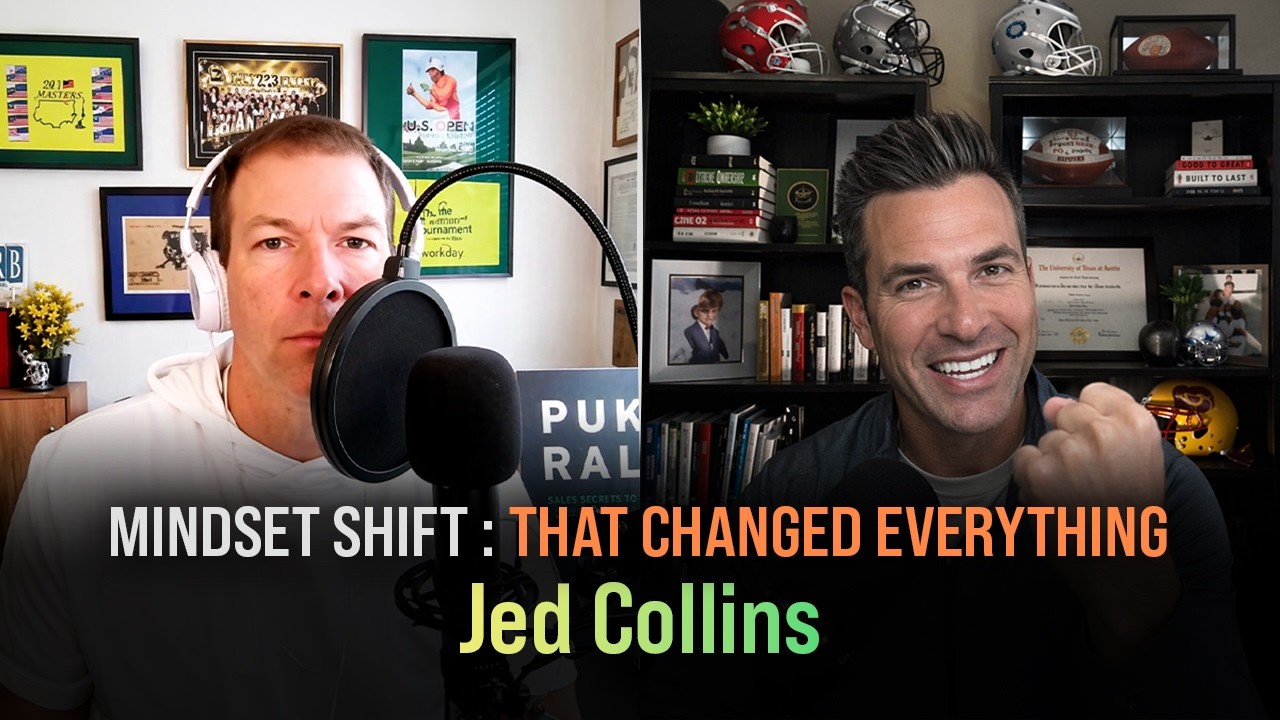
Jed Collins lived that season. A former NFL fullback who carved out a seven-year career after going undrafted, earning Pro Bowl honors, then starting for the New Orleans Saints.
And after being cut multiple times and fighting his way onto 10 different NFL rosters, he turned those lessons into a new kind of discipline: not just toughness on the field, but financial discipline off it.
Table of Contents
- 🏀 Where winning culture starts: Mission Viejo and the moment the shoes hit
- 🏈 From linebacker to tight end to “why won’t you run a 40?”
- 🧠 “On UDFA, you’re dead for anything”: The mindset that kept him alive in Philly
- 🦍 Jedzilla: The 10-step mental checklist before battle
- 🔥 How he maintained it during a long game: Collision as the reset point
- 🧩 “Great failure” and practice squad survival: the hardest enemy is self-doubt
- 🎲 The Saints moment: belief turned into fullback fulfillment in 2011
- 🧭 Drew Brees and the habit of greatness
- 🗂️ 4th & goal in the real world: what a “blindsided” call did to his plan
- 📝 The power of journaling: travel through time and build a brand from first-person truth
- ⚖️ Gratitude and perspective: the “million-dollar tomorrow” mindset
- 💸 Money is lazy: the “financial discipline” philosophy behind his Money Vehicle
- 📌 The identity lesson: chase passion, build a career, and accept the darkness
- ✅ If we want the 4th & goal mentality, we build it daily
🏀 Where winning culture starts: Mission Viejo and the moment the shoes hit
We often assume athletes are born with a single lane. But Jed’s lane changed because of a coach and a question.
Growing up in Mission Viejo, California, he came from a basketball family. His dad played at Seattle University, and his brothers were basketball-first. Even when he transferred from Santa Margarita to Mission Viejo after his freshman year, the family focus was clear: “Jed’s going to focus on basketball. I’m going to be a hooper.”
But Bob challenged it with a simple pivot: “Put a pair of tennis shoes in front of me. Come out to practice.”
What mattered wasn’t the sport switch. It was the identity shift. Bob Johnson’s program taught Jed to walk onto the field believing we already won the game.
Mission Viejo didn’t just create individual players. It created a pipeline of young men who learned what “winning” actually requires: work, belief, and culture.
🏈 From linebacker to tight end to “why won’t you run a 40?”
Jed went to Washington State as a linebacker. In his mind, he was on the right path. But the physical test was brutal, and he couldn’t outrun it.
He was “best in the West.” He was all-American. He was respected. But he had one limitation he could never muscle through: he couldn’t run a fast 40-yard dash.
At a Nike camp he ran a time around 5.07. Interest faded fast. Recruiters didn’t want to sign his kind of body on paper, even if film and instincts proved he could play.
Washington State told him they still believed he could play linebacker. Then, after two weeks, the message flipped. He wasn’t going to play linebacker. It felt like a bait and switch, and it crushed his certainty.
But then Washington State offered a new door. Jed transitioned to tight end. Being a step slow became a teacher. He had to learn coverages. He had to learn space. He had to learn how openings appear in the timing between a defender and a play.
Basketball gave him a hidden advantage: body control and comfort with creating a jump shot. That rhythm translated to route spacing and catching. He led the nation in receptions and still played with a “play smarter” mindset.
He ended up second team All-Pac-10. The first team player ran a faster 40 and looked like a “first round” prototype. Jed did not.
That is why he went undrafted.
🧠 “On UDFA, you’re dead for anything”: The mindset that kept him alive in Philly
Undrafted free agent life is a narrow bridge. Jed understood the rules immediately.
When he signed with the Eagles, he knew the margin was microscopic. As an undrafted player, you don’t get much more than a chance and an opportunity. Any mistake could end it fast.
So Jed showed up with preparation so tight it looked like obsession. He had to be early. He had to know the playbook. Everything had to be perfect because, in his words, “on UDFA, you’re dead for anything.”
There was a real example in camp: another undrafted guy was late to a meeting. He wasn’t there the next day. The consequences were immediate, public, and final.
Then Jed got the chance to go against a legend.
During training camp, he watched Brian Dawkins. Dawkins had an alter ego on the field, the “Weapon X” persona fans mythologized. Jed noticed how Dawkins prepared like a character, not just like an athlete.
Then, on a first play responsibility, his job was clear: block the strong safety. And that strong safety was Brian Dawkins.
Jed described the moment like a movie: he didn’t just see a player. He saw a presence descend into the frame. Dawkins knocked him into next Tuesday.
The collision wasn’t only physical. That night, looking in the mirror, Jed realized something important: he was a fish out of water.
And once you see that clearly, you have two options. Panic or rebuild.
Jed rebuilt his belief. He forced himself to start saying the truth he needed to live. “I’m a Philadelphia Eagle. I’m the starting fullback.” It sounded like tricking himself at first, but he treated belief as training.
That’s what the journey demanded. He didn’t become “good enough” first. He had to act like he belonged before coaches ever agreed.
🦍 Jedzilla: The 10-step mental checklist before battle
Belief alone is fragile. Jed gave his belief structure.
He created an alter ego for himself: Jedzilla.
He described his checklist as something he started hours before game time, not in the tunnel right before impact. Long before kickoff, he began the process of “waking up Zilla.”
📍 The checklist rhythm (as he lived it)
- Awakening early: in the hotel hours, before he even made it to the stadium.
- Circle the field: he would circle the perimeter before stepping on the actual playing surface.
- Walk to the 50: he walked directly down the 50-yard line onto the logo.
- Take in the world: look north, south, east, west and absorb the moment.
- Switch belief: gratitude into respect into “no longer fear.”
- Own the narrative: he told himself the opponent had fear, and today they would meet the monster.
- Accept the worst possibility: he accepted that he might not walk off the field and that he still had to be willing to go “nose first.”
- National anthem ritual: music tickled him into focus, and the anthem became a psychological countdown.
- The scream: he let out a blood-curdling scream before the final phrase as the “chains were off” signal.
- First to touch the field: he jumped as the anthem ended so he could arrive first, mentally.
And here’s what mattered most: he wasn’t claiming he was naturally fearless. He emphasized that he trained his voice and his battle energy. He didn’t “have” it. He directed it.
🔥 How he maintained it during a long game: Collision as the reset point
Jed described something coaches appreciate and players often learn the hard way: game emotions don’t stay at the same volume all afternoon.
In football, the fireworks fade once the first hit lands. He leaned into that reality.
He loved being on special teams because it delivered the first collision quickly. Then momentum became physical, not theoretical.
He also explained that in NFL games, the early plays are scripted to see how the defense matches up. Once coaches knew Jed was “willing to go to battle,” they leaned on him early.
One of the core plays in his routine was a right-bottom “lead ISO.” It was an old-school downhill smash concept. Coaches wanted Jed to set the tone.
His mental game became simple: will over skill.
His position wasn’t like a quarterback who comes to the sideline analyzing defensive coverages. His job was aggression and execution through later quarters. The hardest challenge for a fullback is when the team is up by 10 and everyone knows the fourth quarter is downhill running only.
So his focus stayed on the only question that mattered: can he keep choosing aggression? Can he keep his mind locked until the final whistle?
🧩 “Great failure” and practice squad survival: the hardest enemy is self-doubt
Jed challenged a mindset most people refuse to touch. He called himself a tough man to kill, and he described it as being a “great failure” in other people’s eyes.
Cut 13 times. That doesn’t sound like “winning” on the surface. But Jed treated each cut like feedback. Not a final verdict.
He explained this through a childhood game his dad created called “King for a Day.” As the youngest brother, he lost often. But he learned a rule: if you lose, you lose the chance to learn today, and you show up anyway.
Later, another layer of belief surfaced in college and the NFL: you can’t control outcomes. You control inputs.
That is why his identity became “I’m still here.” Not “I’m special.” “I’m still standing.”
🎯 What practice squad taught him
People underestimate practice squad life. Jed said the practice squad is mentally hard because you can feel like the enemy of everyone.
- Starters don’t want you: if you’re going hard in practice, it makes them feel threatened.
- You’re an ankle away: you’re one slip, one comment, one opportunity away from playing.
- Your access depends on the organization: some teams include you in travel and game-day preparation, others see you only during practice week.
- There are external reasons for cuts: he had times he was cut not because of his performance but because a team needed a different kind of player or wanted experience.
And still, he showed up with full energy. In practice, he played multiple roles. He said he filled in from defensive end to free safety to wide receiver when needed.
That’s what kept him alive: the refusal to treat “practice squad” as an apology. It was preparation for a moment that would come, sometimes unexpectedly.
5 Mental Toughness Advantages For Financial Advisors |
|
Download |
| Click here |
🎲 The Saints moment: belief turned into fullback fulfillment in 2011
Jed’s turning point at the New Orleans Saints did not start with guaranteed success. It started with a system and a timing loophole.
During the walk out of the facility, they couldn’t even practice. The season went through collective bargaining constraints that made free agents sit out the first three days of training camp once they returned.
One free agent was Cory Hall. Jed became friendly with him. But Hall had to sit on the sidelines those first days.
That small delay changed Jed’s opportunity. He told himself, “I’m never giving this up.” He went into camp believing he should be on the field. Not hoping he might earn it.
He described it as fire with fire: he would lay it all on the line. He wanted no question where the intensity came from.
He also emphasized something cultural: the Saints trusted misfit toys. Sean Payton didn’t care about your draft status as much as your performance.
Jed said he walked in no longer believing he could make the team. He believed he should play over anyone on the roster. His mindset became internal competition rather than external validation.
🌟 The “Be a pro” framework he carried building to building
In every building he entered, he said there were three words on the wall: “Be a pro.”
He translated it into three attributes:
- Confidence: if we don’t believe we deserve to be here, we can’t build anything else.
- Trust: building trust with teammates, coaches, and the organization.
- Value: walk in every day and add value somehow.
Confidence, trust, and value became his version of professional discipline.
🧭 Drew Brees and the habit of greatness
Jed didn’t just respect Drew Brees. He studied the mental toughness habits.
He described waking up early, walking through a building before it was fully awake, and seeing Brees in the quarterback room watching film with perfect posture. There wasn’t slouching, there wasn’t performative energy. It was consistency.
To Jed, Drew made the Saints run.
🗂️ 4th & goal in the real world: what a “blindsided” call did to his plan
In 4th & goal, a major emotional section happens after Jed negotiated the business side of football.
He finished the season as a restricted free agent in New Orleans. He believed they would tender him because he was a top-rated fullback for the prior years. He even went into the building thinking the conversation would be a short one.
He prepared “pocket questions” to ask the general manager. He believed the power in an interview is in the questions you arrive with. But after the conversation, the business tone faded into uncertainty. He could feel the story changing.
Then came the call on his birthday. They weren’t going to tender him and bring him back as expected. They were starting due diligence and bringing in other fullbacks.
Jed described the emotional chaos behind the scenes, especially because his wife was about to give birth. Weeks became one day closer to the baby, and that timing intensified everything.
They both tried to stay strong, but emotion leaked out anyway. Quiet breakdowns. Tears in the early morning. The kind of raw reality that most highlight reels never show.
This is where the book’s theme becomes vivid: we don’t get our identity from being tendered. We get it from what we choose to do after the rug moves.
📝 The power of journaling: travel through time and build a brand from first-person truth
Jed said journaling is an “early lost skill,” and it did three things for him.
- It creates gratitude and perspective. When we write it down, we stop living in vague fear.
- It trains self-awareness. We see what our subconscious believes during the lows.
- It preserves first-person truth for a voice. AI can’t do what his personal experience does.
He challenged athletes who want to build a brand and make money. A brand starts with your story, and your story starts with documentation. It isn’t enough to feel it. We have to record it.
Journaling can be pen and paper, but it can also be voice notes or a phone recording. The purpose is the same: capture the truth as it happens, and end the page with what you’re willing to do next time.
📌 The book’s lesson embedded in “Cocktail Party”
Jed included a horrific turning-point moment in the season he called “Cocktail Party.” A young man got knocked unconscious, and Jed described it as breaking something inside him. He began to battle his own fear: am I done?
In his journals, he captured the thought spiral. He hoped he could keep his job without leading with his head. He feared the collisions, even though coaches later told him he needed to become more physical and more aggressive.
The deeper point wasn’t the hit itself. It was how writing exposed the subconscious and pushed him back into training discipline. The journaling gave him a map of where his mind went when things went dark.
⚖️ Gratitude and perspective: the “million-dollar tomorrow” mindset
Jed tied gratitude and perspective to mental toughness.
He described a perspective exercise: if we offered a million dollars but also guaranteed you wouldn’t wake up tomorrow, most people would refuse. The catch reveals the real value of life itself. Waking up tomorrow is worth more than money.
He also talked about comparison as the thief of joy. The person making $18 million isn’t necessarily happier. Everyone has problems. Social media only shows the highlight reel, not the internal battle.
Another shift came with age. Money stops being the only measurement. Wealth becomes more about marriage stability, kids, health, and legacy. Wealth becomes the whole life, not just the number.
His view of “rich vs wealthy” connected to a simple idea: numbers matter, but they are not the final scoreboard.
💸 Money is lazy: the “financial discipline” philosophy behind his Money Vehicle
After football, Jed transitioned into wealth management and built his approach around the concept that most people misunderstand money.
He realized his dream wasn’t just helping families go from $2 million to $4 million or $4 million to $8 million. His larger mission was to help people become wealthy from the start.
So his framework became: Money is the vehicle, not the destination.
Saving is a first step, but saving alone does not complete the job. Money needs to be told to work like an employee. He calls that adopting an “invite investor mindset.”
Then he created a simple education process for young people who are curious about investing but get pulled toward short-term gambling like meme stocks and options hype.
🏟️ The sports analogy that unlocked investing: betting from 1 team to the whole league
Jed compared investing to wagering on outcomes with the same payout logic.
- Bet on one team: like betting the Baltimore Ravens. That’s like picking a single stock.
- Bet on a division: like betting all AFC North teams. That’s like using mutual funds or ETFs, a basket of companies.
- Bet on the whole league: like betting one winner across all 32 teams. That’s like an index fund, which gives diversification without paying someone to actively choose winners.
His message: diversification is the “free lunch” of investing, and time is the biggest factor of all. Young investors have a special advantage because compounding starts earlier.
🧑🏫 Education, not advice
Jed also emphasized the difference between knowledge and guidance. He teaches financial knowledge. He doesn’t position himself as a substitute for professional advice.
But his educational thesis is clear: if we can understand how index funds diversify risk, we can start with confidence instead of fear.
📌 The identity lesson: chase passion, build a career, and accept the darkness
Near the end, Jed returned to a deeper life question that no money plan can fix.
He said we have to chase passion. He didn’t have a roadmap to becoming a fullback of finance. There was no “career pathway” built for him. So he built his own lane by obsession and persistence.
He advised young people to pick something we can’t stop thinking about. Not just what pays the most. Something we wake up obsessed with.
Because no matter what career path we choose, there will be puke and rally moments. There will be failures. There will be roadblocks and discouragement.
But the right passion makes the dark days survivable.
✅ If we want the 4th & goal mentality, we build it daily
Jed Collins’s 4th & goal mindset is not a motivational slogan. It is a system:
- Belief before coaches: act like we belong before proof appears.
- Ritual before battle: build a checklist that moves fear into respect and gratitude into action.
- Collision as focus: once the first hit lands, stay aggressive through the long game.
- Great failure: treat cuts and setbacks as feedback, not final judgment.
- Journaling: document first-person truth for discipline, perspective, and a real voice.
- Financial discipline: money is lazy until we direct it to work, starting with simple diversification and time.
That is the real 4th & goal. Not the moment on the scoreboard. The moment we decide we will be “tough to kill” in every arena, because we refuse to stop becoming.

Dr. Rob Bell is a Sport Psychology Coach. DRB & associates coach executives and professional athletes. Some clients have included three different winners on the PGA Tour, Indy Eleven, University of Notre Dame, Marriott, and Walgreens.
- Check Out All The Books
- Keynote Speaking On Mental Toughness
- Mental Toughness Podcast as we interview expert athletes and coaches about Mental Strength and their Hinge Moment.
- New Blog Posts are published weekly.
- Follow on Twitter @drrobbell
- Follow on Instagram @drrobbell