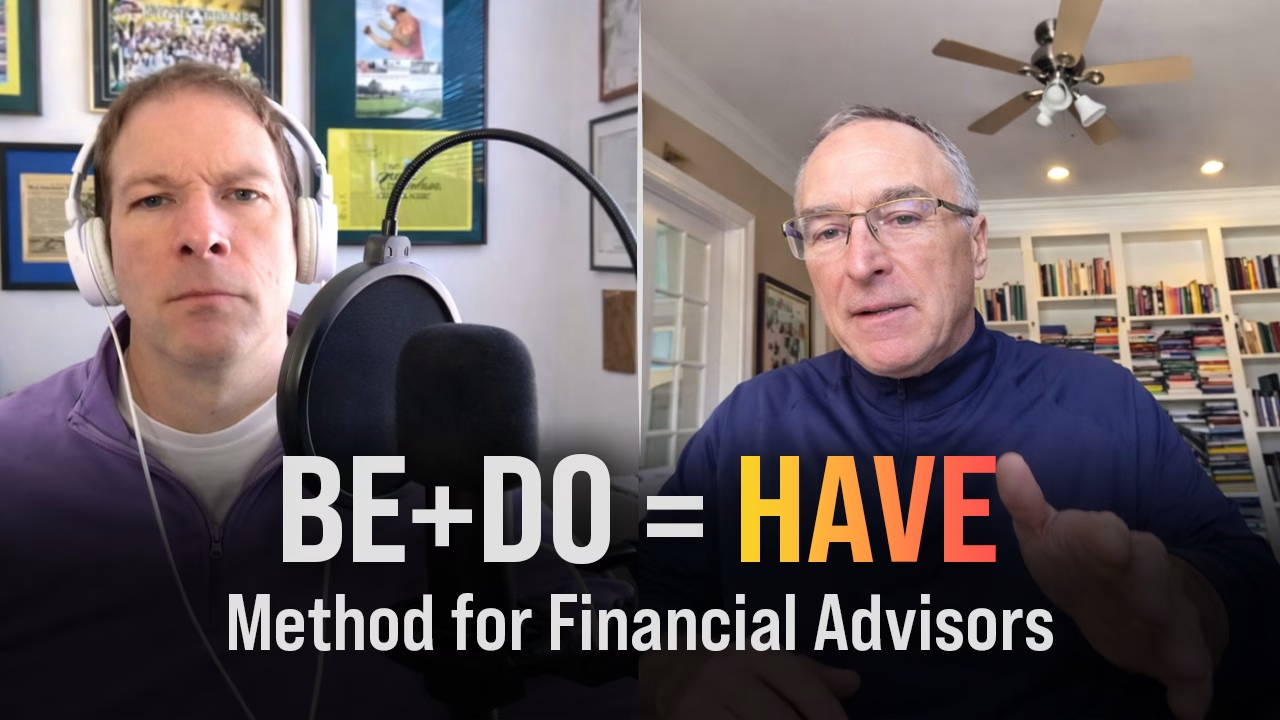
Dropping from the stock market feels like quitting an ultramarathon!
If you have ever considered exiting your investments when prices fall, you are not alone.
Dropping from the stock market is a common reaction driven by pain, relief, and short-term thinking. Our video explains why investors abandon positions at precisely the moments when remaining invested produces the best long-term outcomes, and it gives a practical framework to prevent emotional exits.
Table of Contents
- What “dropping from the stock market” really means
- The emotional sequence that leads to selling
- Why selling during downturns feels “correct”
- A simple framework to avoid dropping from the stock market
- Checklist: Before you sell during a downturn
- Common mistakes and myths
- Short Q&A: People also ask
- Final takeaway
- Quick action plan
Why “dropping from the stock market” is the same emotionally as quitting an ultramarathon.
First, every one of us is in an ultramarathon race, whether we know it or not.
Life isn’t a sprint, but it’s NOT a MARATHON either.
In plain terms, dropping from the stock market is the act of selling a diversified portfolio, individual holdings, or stopping systematic investing because of fear, losses, or temporary volatility. It is usually an emotionally motivated decision — not a strategy based on valuations, plan changes, or life goals. Understanding the distinction matters because the consequences are often permanent: missing recoveries, compounding, and long-term growth.
It’s the same reason why people quit in an ultramarathon. PAIN. It hurts and the best way to solve the pain is the same reason why dropping from the stock market as well. It gives INSTANT relief!!
INSTANT RELIEF!
The issue is, everyone who drops from a race, the very next day asks themselves, ” Did I really have to drop?” And the next emotion and feeling is regret.
Dropping from the stock market might produce instant relief, but the following emotion is regret! And that is followed by trying to time the market and get back in.
Who does this and why it matters
Every investor experiences market drawdowns.
The difference is how people respond. Those who sell during downturns often trade the long-term benefit of compounding for immediate relief. Dropping from the stock market matters because timing exits and re-entries is extremely difficult. Missing a handful of the market’s best recovery days can erase years of gains.
The emotional sequence that leads to selling
The decision to sell usually follows a predictable psychological arc:
- Pain: A portfolio drops in value and emotional discomfort increases.
- Relief: Selling immediately reduces anxiety; relief reinforces the behavior.
- Regret: When the market rebounds, sellers wonder if they acted too soon.
- Indecision and timing attempts: Many try to re-enter at a perceived low, often missing gains and repeating the cycle.
That loop explains why dropping from the stock market tends to happen near market troughs and why re-entry timing rarely recovers the original position.
Why selling during downturns feels “correct”
Three cognitive errors push investors toward dropping from the stock market:
- Loss aversion: Losses feel worse than gains feel good, prompting protective selling.
- Action bias: Under stress we prefer doing something to reduce discomfort even if inaction is better.
- Mere urgency effect: When a loss feels urgent, it displaces long-term priorities and focus.
These instincts are powerful because they bring instant emotional payoff. The crucial point: instant relief is not the same as better investment outcomes.
A simple framework to avoid dropping from the stock market
Below is a practical, repeatable framework investors can adopt to reduce emotionally driven selling.
- Define your plan and tolerances in advance. Write down your investment horizon, risk tolerance, and rebalancing rules. If you know how much drawdown you can accept, you will be less likely to abandon your plan during stress.
- Separate volatility from solvency. Volatility is normal. Selling should be considered only if a fundamental change undermines your plan (for example, a job loss requiring immediate cash, or a change in goals), not because prices fell.
- Use pre-set rules. Automatic rebalancing, periodic contributions, or stop-loss policies tied to fundamentals reduce impulsive choices. Rules convert emotional decisions into mechanical actions.
- Build a liquidity buffer. Maintain an emergency fund and short-term cash to cover near-term needs so you are not forced to sell in down markets. This helps the puke & rally mindset!
- Practice “pause and reframe.” When tempted to sell, wait 24-72 hours and answer: Has anything changed about my goals? What is my worst-case scenario if I remain invested?
- Educate and rehearse. Run historical scenarios showing how long-term investors who stayed the course recovered after major drawdowns.
Checklist: Before you sell during a downturn
- Is my financial goal still the same?
- Do I need cash within the next 12 months?
- Have I exhausted non-permanent solutions (loans, side income) before liquidating investments?
- Am I reacting to headlines or to a change in fundamentals?
Common mistakes and myths
Address these frequent misconceptions that lead to dropping from the stock market:
- “I can time the bottom.” Market timing requires predicting human behavior and news. Even professionals rarely do it consistently.
- “I’ll buy back when it looks safer.” Waiting for “safety” often means missing the fastest recovery days.
- “Selling reduces my risk.” Selling reduces market risk but introduces sequence-of-returns and opportunity risk; both can be costlier long term.
Short Q&A: People also ask
Is it ever smart to drop out of the market?
No, not really…
How big a drop should trigger action?
There is no universal threshold. Use your personal risk tolerance and plan. For many long-term investors, periodic drops of 10-30 percent are expected; acting on them usually harms returns.
How can I stop panicking during market declines?
Create and follow rules, keep an emergency fund, limit news consumption, and review historical recoveries. Consider consulting a financial advisor to assess whether your reactions align with your financial plan.
Final takeaway
Dropping from the stock market is an emotional response that provides short-term relief but often produces long-term regret.
The antidote is planning, rules, and building mental habits that favor the long-term over temporary discomfort. Use the checklist and framework above to convert impulsive reactions into disciplined decisions. When markets test your conviction, the choice is between the pain of discipline and the pain of regret — preparation decides which you feel.
Book Dr. Rob Bell To Speak |
|
“Let’s chat” |
| Click here |
Quick action plan
- Document your investment goals and drawdown tolerance today.
- Set up automatic contributions and rebalancing.
- Build a 3–12 month cash reserve for immediate needs.
- Wait 48 hours before any emotionally driven sell.

Dr. Rob Bell is a Sport Psychology Coach. DRB & associates coach executives and professional athletes. Some clients have included three different winners on the PGA Tour, Indy Eleven, University of Notre Dame, Marriott, and Walgreens.
- Check Out All The Books
- Keynote Speaking On Mental Toughness
- Mental Toughness Podcast as we interview expert athletes and coaches about Mental Strength and their Hinge Moment.
- New Blog Posts are published weekly.
- Follow on Twitter @drrobbell
- Follow on Instagram @drrobbell