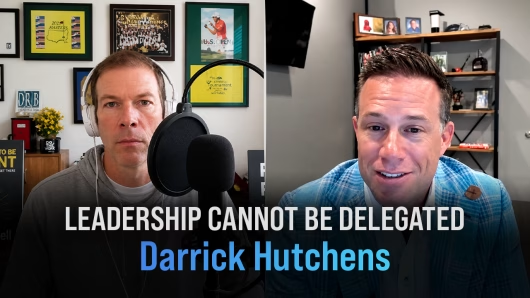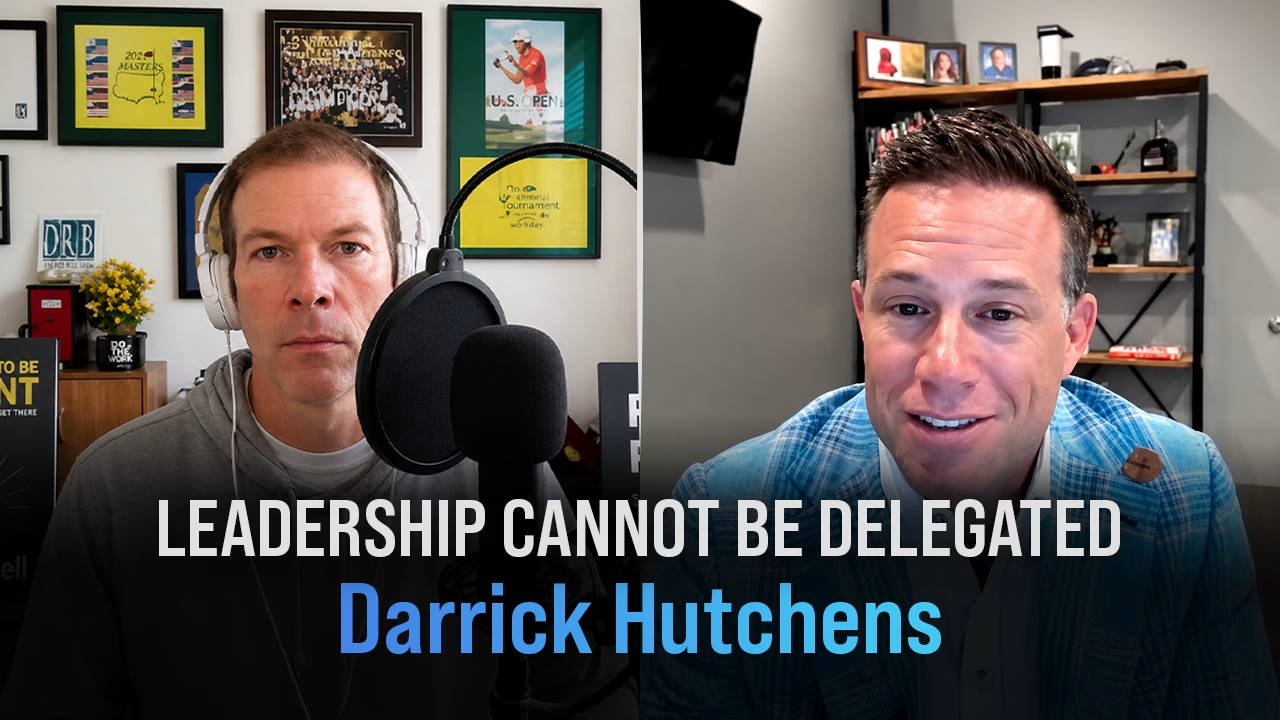
Financial Advisor Leadership is easy to talk about when markets are up, business is growing, and confidence is high.
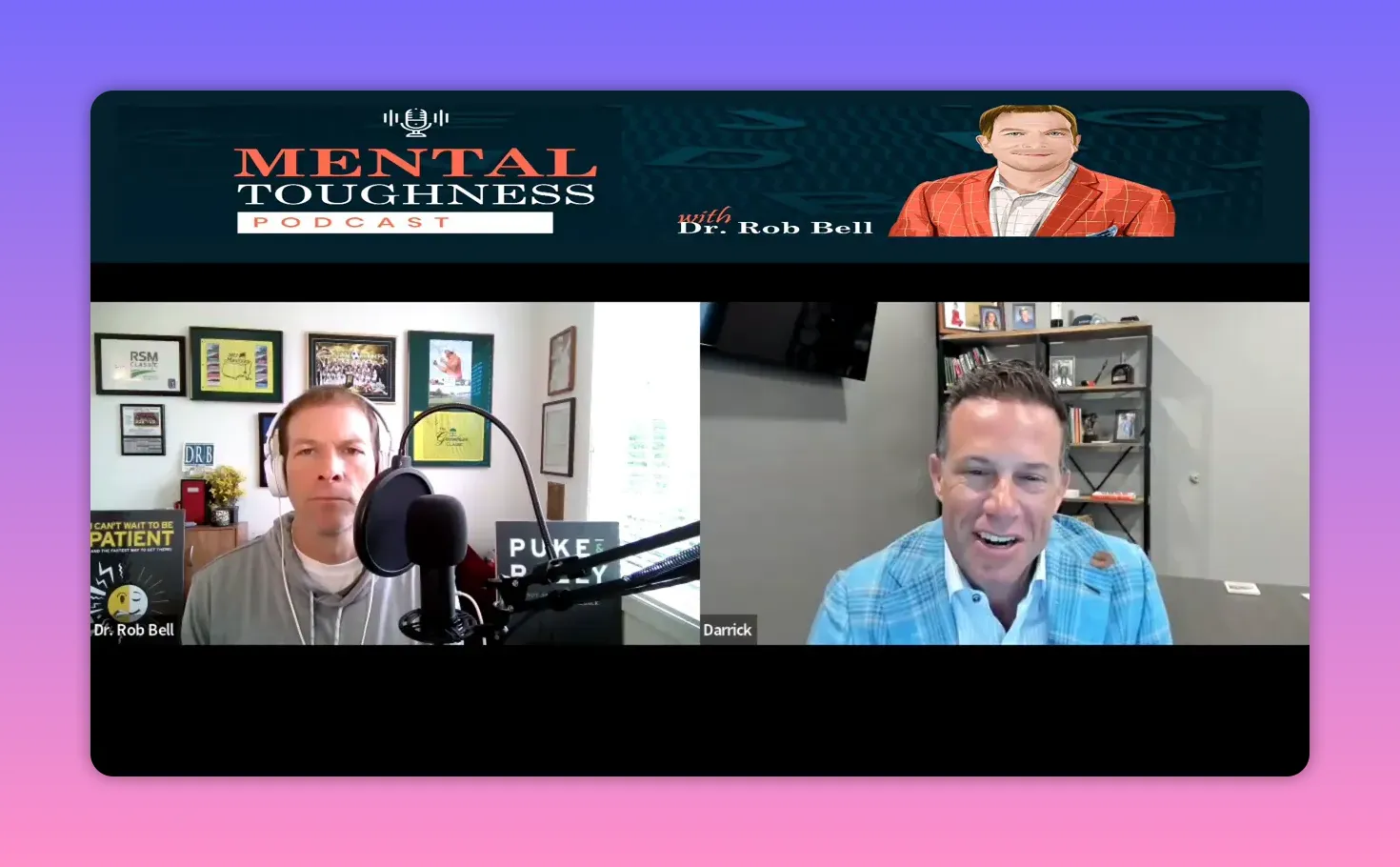
It gets real when things are messy, uncertain, and uncomfortable. That is what made this podcast episode with Darrick Hutchens of Monon Wealth Management so strong. It was not just about investing. It was about composure, identity, setbacks, leadership, and the kind of discipline required to stay steady when pressure rises.
5 Mental Toughness Advantages For Financial Advisors |
|
Download |
| Click here |
Darrick Hutchens of Monon Wealth Management brought the mindset of a competitive golfer, the scars of building a business, and the empathy of someone who understands that managing money is never just about money.
It is about people. It is about families. It is about legacy.
And at the center of it all is a simple idea that applies far beyond finance: leadership cannot be delegated.
This episode of the Mental Toughness Podcast With Dr. Rob Bell offered far more than a professional success story. It gave us take-home lessons we can all use, whether we lead clients, teams, a business, or just ourselves through a difficult season.
Table of Contents
- ⛳ Golf, Control, and the Early Roots of Financial Advisor Leadership
- 🧠 What Golf Teaches Us About Setbacks and Self-Awareness
- 📈 Markets Are Not Linear, and Neither Are We
- ⚠️ Risk Tolerance Is Really Loss Tolerance
- 🧭 Only Invest in What You Can Live With
- 👶 The Hinge Moment That Changed Everything
- 🚀 Going All In When the Business Was Barely Breathing
- 🤝 Why Relationships and Empathy Still Win
- 👥 Leadership Cannot Be Delegated
- 🏢 Exit Planning, Legacy, and a Specialized Niche
- 🛠️ Take-Home Lessons We Can All Use
- 📚 Additional Resources
- 🏁 Final Thought on Financial Advisor Leadership
⛳ Golf, Control, and the Early Roots of Financial Advisor Leadership
Darrick’s story starts with sports, especially golf. Like a lot of kids growing up, he played everything. Baseball, basketball, football. But golf became different for him when he realized something important: raw athleticism is useful, but fundamentals and process can beat talent that is undisciplined.
His grandfather helped shape that early. The message was simple: learn the game the right way so you are not fighting bad habits for the rest of your life. That is a powerful principle in sports, and it is just as powerful in Financial Advisor Leadership.
When Darrick was younger and physically behind some of his peers, golf gave him a lane. He could not always overpower people, but he could out-process them. He could do things in the right order. He could prepare. He could put in time. He could control the fundamentals.
That lesson stayed with him. If we have the right grip, the right stance, the right mechanics, and the right mindset, we give ourselves a chance. Not a guarantee. An opportunity.
That is also why process matters so much in any high-pressure field. The best professionals do not just chase outcomes. They build systems that help them perform when emotion wants to take over. That is one reason this conversation connects so well with Dr. Bell’s emphasis on why the process is more important than the result.
📈 Markets Are Not Linear, and Neither Are We
One of the strongest parts of this podcast interview was how naturally Darrick connected golf to investing. Improvement is rarely a straight line. Markets are not a straight line either.
He pointed out that even when long-term returns are strong, the ride there can feel anything but smooth. There are pullbacks, overshoots, fear cycles, and stretches that test conviction. Looking backward, the pattern often makes sense. Living through it, not so much.
That is where Financial Advisor Leadership really matters. It is not just about knowing historical averages. It is about helping people stay anchored when their emotions are screaming that something is broken.
Darrick talked about the recent years in the market, including periods when returns looked outstanding over 12, 24, and 36 months. But he made an important point: we cannot build a financial plan on unusually strong returns and pretend they are normal.
Average returns are made up of some very good periods and some very painful ones.
That kind of leadership requires honesty. It means telling clients not only what is possible, but what is realistic. It means preparing people emotionally, not just mathematically.
⚠️ Risk Tolerance Is Really Loss Tolerance
There was also a refreshingly honest conversation about risk.
Darrick basically said what many people know but do not always admit: when people talk about risk tolerance, they are often really talking about loss tolerance.
Everybody likes upside. Everybody is comfortable with volatility when it is paying them. The problem comes when the exact same force swings the other way.
That is why Darrick likes to ask questions that cut through theory. Not “How do you feel about making 20%?” Of course everyone likes that. The better question is: How would you feel if you lost 20% over six months?
That question gets us closer to truth.
He also made another sharp observation that more people should remember: sometimes we mistake the upside of volatility for skill, certainty, or a new era. Whether the excitement is around crypto, hot stocks, or speculative trends, people often embrace the gains without fully respecting what generated them.
Volatility cuts both ways. The upside is still volatility.
That is Financial Advisor Leadership in plain terms. It helps people understand the ride they are signing up for before emotions hijack the plan.
🧭 Only Invest in What You Can Live With
One of the most practical takeaways from Darrick Hutchens of Monon Wealth Management came from a simple personal rule he set after a difficult stretch in 2022. Sitting at the pool during Christmas break, writing down goals and lessons learned, he landed on this:
I only want to invest in things that I can live with.
That is not a catchy slogan. It is a standard.
For him, it means choosing strategies that he can stay with even if they underperform, even if they get criticized, and even if they go through a rough six months. In other words, confidence must be built on process and research, not recent results.
That is useful for all of us, even outside investing. We should build careers, habits, partnerships, and strategies we can live with when life gets noisy.
If we are constantly changing direction based on discomfort, we are not leading. We are reacting.
That is why themes like emotional control and consistency remain so important in Financial Advisor Leadership.
For more on that mindset, 5 Mental Toughness Advantages for Financial Advisors is a fitting resource.
👶 The Hinge Moment That Changed Everything
Every great podcast conversation seems to arrive at one hinge moment, one event that changes the trajectory of a life. For Darrick, it was learning that his wife was pregnant with their daughter, Faith.
He was brutally honest about where he was at the time. He had talent. He had experience. He had held solid roles in the investment business. But he was not giving it everything he had. He was drifting. Doing enough. Coasting more than building.
Then came the news that he was going to be a father.
His reaction was visceral. He got sick. But once that passed, something shifted. The life he had been willing to tolerate for himself was no longer good enough for the example he wanted to set for his daughter.
That is where purpose entered the picture in a different way. Not abstract ambition. Responsibility.
Between finding out Shannon was pregnant and the baby arriving, he completed his CFP after two earlier false starts. He started making a deeper impact with clients. Then shortly after his daughter was born, he made the leap to start his own firm.
This part matters because it reminds us that growth often begins when our standards change. We may not move for ourselves. But sometimes we will move for the people counting on us.
🚀 Going All In When the Business Was Barely Breathing
Starting a firm sounds exciting when we summarize it in hindsight. Living it is another story.
Darrick described the early days of Monon Wealth in very real terms. They were lean. They were stretched. They were broke. He had a new baby, a new house, and he went 18 months without a paycheck.
At some point, progress alone was not enough. The pace was too slow. So he walked over to his partner Ray’s cubicle and said it was time to go all in. Either this was going to work, or it was not.
That led to a massive push: an 80-seminar series over 18 months, steak dinners, follow-up calls, presentations, event logistics, relationship building, and late nights over and over again. They created demand the hard way.
And it worked.
This is a great reminder that Financial Advisor Leadership is not built in comfort. It is built when we are willing to commit before certainty arrives.
It also highlights one of the clearest success patterns in the conversation: Darrick did not claim to be the smartest or most experienced person in the room. His edge was simpler.
No matter what hit me, I just kept going.
That may be the most transferable lesson in the entire interview.
🤝 Why Relationships and Empathy Still Win
Darrick Hutchens of Monon Wealth Management also gave a thoughtful overview of how the advisory business has changed. It used to be about proprietary products. Then it became more about access and advice. Now it is evolving again.
Product is not enough. Information is everywhere. Advice itself is becoming more accessible. In a world where people can get quick answers from AI, the real differentiator is not information alone. It is leadership and wisdom.
That was one of the sharpest insights in the whole podcast interview.
Today, the work goes well beyond picking investments. It includes:
- Wealth enhancement through tax mitigation and liquidity planning
- Wealth protection against risks like unjust litigation
- Wealth transfer so assets go where clients want, efficiently
- Charitable planning that reflects what matters most
But even with all of that sophistication, the human part still matters most. Darrick said something that deserves attention: good wealth managers feel deeply. They carry client concern. They think constantly not just about portfolios, but about how clients are feeling about their money.
That empathy is not a side trait. It is part of the job.
This aligns closely with Dr. Bell’s work on responding under pressure and choosing composure over panic, which is why his piece on responding to adversity fits so naturally here.
👥 Leadership Cannot Be Delegated
The title idea from this episode lands hardest when Darrick talks about his team.
He was candid that he became a better leader for clients before he became a better leader for his internal team. Early on, he wanted to go fast. Later, he understood that if you want to go far, you need people, mentoring, systems, and trust.
He spoke with obvious respect about the team around him, especially Stephanie, who helped hold the firm together in the early years, and the rest of the growing team at Monon Wealth. He also described intentional steps to professionalize the business by bringing in compliance, CFO, HR, marketing, and operational support.
Then came the line that defines this season of his career:
Leadership cannot be delegated.
That became his motto for 2026. He now blocks off Mondays to develop his team because he knows A players still need mentoring, structure, and support.
That is Financial Advisor Leadership in its strongest form. Not just serving clients well, but building an environment where the team can grow, lead, and serve at a high level too.
🏢 Exit Planning, Legacy, and a Specialized Niche
Another important section of the podcast focused on Darrick’s work with leaders in the corrections community. Darrick Hutchens of Monon Wealth Management is especially passionate about this niche because many of his closest relationships and biggest clients are in businesses that support correctional facilities, mental health facilities, and the infrastructure around them.
He talked about the pride he has in these leaders and the work they do, much of which gets very little public recognition. These are companies that support families, communities, and continuity in a highly specialized market.
And many of those owners are at a transition point.
Darrick outlined five general exit or transition paths that business owners tend to consider, including:
- Internal transition
- Family succession
- Private equity partnership
- ESOP structures
- Sale to a competitor or outside buyer
The key lesson was not just knowing the options. It was understanding that the right path depends entirely on the owner’s goals.
Some owners want the business to stay in the family. Some want the company to outlive them and hit year 200. Some are not ready to exit but need capital to grow. The path should serve the goal, not the other way around.
That is where many people get tripped up. They start with lawyers, accountants, or specialists who naturally lead with the tool they sell. If you are an ESOP salesperson, everybody looks like an ESOP.
Darrick’s approach is more neutral and more useful: first define what matters most. Then bring in the right experts to execute.
That is another excellent example of Financial Advisor Leadership. It resists product-first thinking and stays anchored in human goals, values, and legacy.
🛠️ Take-Home Lessons We Can All Use
The best podcast interviews give us ideas we can apply immediately. This one did exactly that. Here are a few take-home messages worth carrying forward:
- Build around process. Fundamentals beat chaos over time.
- Expect nonlinearity. Growth in golf, business, and markets is messy.
- Know your true tolerance. Upside is easy. Loss reveals reality.
- Choose what you can live with. Confidence must survive discomfort.
- Respond, do not react. Especially after a bad day or a bad quarter.
- Let responsibility raise your standards. Sometimes purpose changes everything.
- Keep showing up. Consistency often matters more than brilliance.
- Lead your people directly. Leadership cannot be outsourced.
- Start with goals, not tools. Whether planning investments or succession, define the outcome first.
There is also a deeper thread running through all of this: identity. Darrick’s journey reflects what happens when we stop letting current performance define who we are and start building toward who we know we can become. That theme pairs well with Dr. Bell’s work on identity and performance.
📚 Additional Resources
If this conversation around Financial Advisor Leadership, resilience, and high-performance decision-making connected with you, a few additional resources are worth exploring:
- Dr. Rob Bell on YouTube for more mindset and performance conversations
- mental toughness keynote speaking for organizations and teams
- mental toughness books for deeper learning and practical application
🏁 Final Thought on Financial Advisor Leadership
What made this podcast interview stand out was how honest it felt. Darrick Hutchens of Monon Wealth Management did not present leadership as polish. He presented it as persistence, emotional steadiness, empathy, and responsibility.
Financial Advisor Leadership is not just about knowing what to do with money. It is about staying calm when others cannot. It is about building trust before people need it. It is about choosing a process that can survive pressure. It is about guiding clients, mentoring a team, and making decisions that align with long-term values instead of short-term noise.
And maybe most of all, it is about this: when things get hard, we do not get to hand leadership off to someone else.

Dr. Rob Bell is a Sport Psychology Coach. DRB & associates coach executives and professional athletes. Some clients have included three different winners on the PGA Tour, Indy Eleven, University of Notre Dame, Marriott, and Walgreens.
- Check Out All The Books
- Keynote Speaking On Mental Toughness
- Mental Toughness Podcast as we interview expert athletes and coaches about Mental Strength and their Hinge Moment.
- New Blog Posts are published weekly.
- Follow on Twitter @drrobbell
- Follow on Instagram @drrobbell