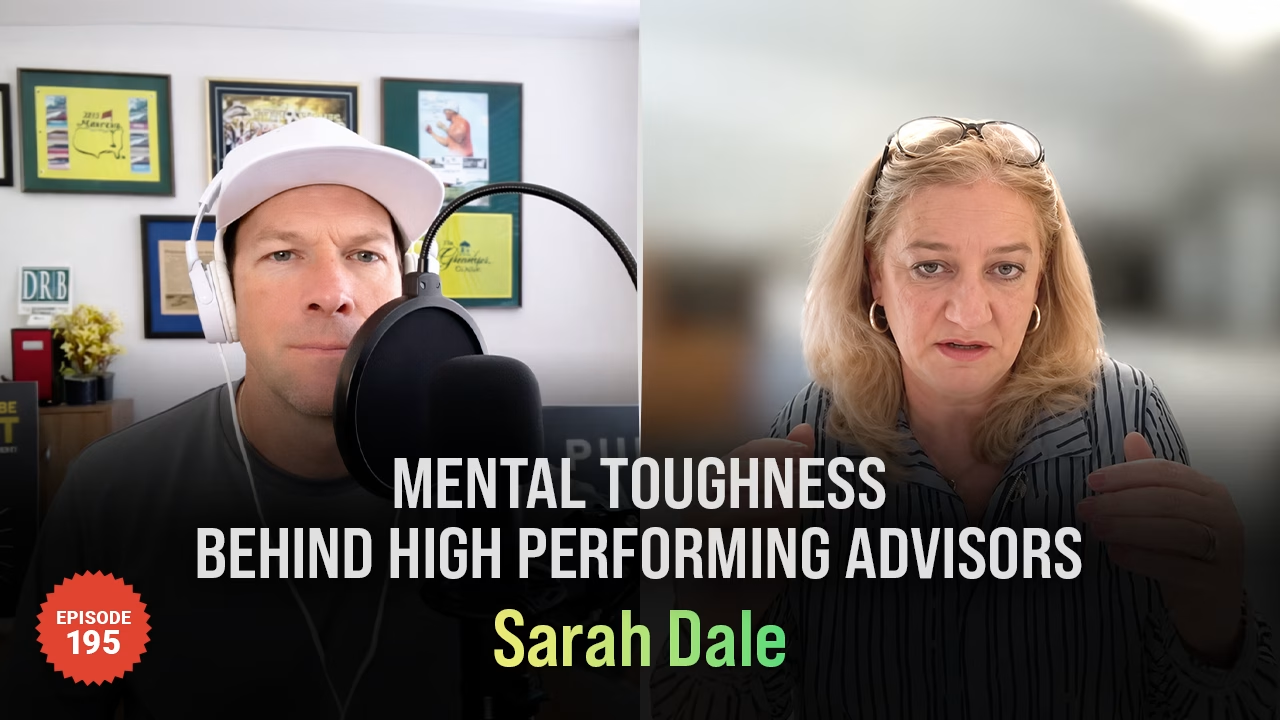
The mental toughness of high performing advisors is not just about staying calm in volatile markets. It is about how we lead people, adapt to change, own our choices, and keep performance sustainable over time. In wealth management, technical skill matters, but mindset, resilience, and leadership habits often separate consistent top performers from those who stall, burn out, or get left behind.
If we want to understand the mental toughness of high performing advisors, we have to look beyond production numbers. We need to examine how strong advisors think, how they lead teams, how they handle change, and how they build trust with clients and colleagues.
https://youtu.be/0eyp4BDSSKQ?si=wwVgiY4IQihKhI9_
Table of Contents
- 1. 🧠 Mental toughness starts with mindset, not motivation
- 2. 👥 High performers know that people drive the numbers
- 3. 🎯 Great advisors are not automatically great leaders
- 4. 🔄 Adaptability is a core part of the mental toughness of high performing advisors
- 5. 🧩 Strong teams are built person by person, not all at once
- 6. 🤝 Support staff are not back office extras. They are performance multipliers
- 7. 📋 Process reduces stress and creates capacity
- 8. 🪞 Ownership beats blame, and ROC is a useful standard
- 9. 🌱 Sustainable success includes identity, transition, and purpose
- Common mistakes that weaken mental toughness 🚨
- Quick checklist to strengthen the mental toughness of high performing advisors ✅
- Final takeaway 🚀
1. 🧠 Mental toughness starts with mindset, not motivation
At the center of the mental toughness of high performing advisors is mindset. Performance usually follows thought patterns long before it shows up in results. Advisors who stay effective under pressure tend to believe they can work through setbacks, learn from disruption, and adjust without losing direction.
This matters because financial services is full of uncertainty. Markets move. client emotions shift. Technology changes. Business models evolve. If our thinking becomes rigid, our performance usually follows.
Strong mindset in this field often includes:
- Self belief without arrogance
- Adaptability without abandoning core values
- Emotional steadiness during stress
- Purpose that goes beyond short term numbers
When we study the mental toughness of high performing advisors, we often find that they do not deny difficulty. They simply refuse to let difficulty define the outcome.
For a related framework on building stronger resilience habits in this profession, see this guide on mental toughness for every financial advisor.
2. 👥 High performers know that people drive the numbers
One of the clearest lessons in the mental toughness of high performing advisors is that numbers matter, but people create numbers. Advisors and firm leaders can become overly fixated on production, AUM, revenue, and growth targets. Those metrics matter, but they are outcomes, not causes.
When leadership focuses only on output, teams often feel managed instead of led. That usually weakens engagement, trust, and service quality. Over time, that hurts the very metrics leadership is chasing.
Mental toughness in leadership means resisting the urge to obsess over scoreboards while neglecting the people responsible for performance.
We can apply this by asking:
- Are we improving the team experience or only measuring production?
- Do team members feel known as individuals?
- Are we creating a work environment that supports better client care?
In many firms, the best path to stronger client experience starts with stronger team experience. That is a major part of the mental toughness of high performing advisors because it requires patience, emotional intelligence, and long term thinking.
3. 🎯 Great advisors are not automatically great leaders
A common mistake in wealth management is assuming that outstanding advisors will naturally become strong team leaders. That is not always true. The skills that help us win business and serve clients are not identical to the skills needed to lead a growing team.
This is one of the most practical insights about the mental toughness of high performing advisors. As the industry shifts from solo practice models to team based models, many advisors are being pushed into leadership roles without proper preparation or real interest.
Leadership requires us to:
- Communicate clearly
- Understand individual team members
- Manage tension without blame
- Create clarity during change
- Model values in action, not just in statements
Some advisors thrive in this role. Others do not. Mental toughness includes the honesty to admit when leadership is not our best lane and the humility to bring in someone who is better suited for it.
That kind of self awareness often improves performance more than trying to control everything ourselves.
4. 🔄 Adaptability is a core part of the mental toughness of high performing advisors
The mental toughness of high performing advisors is deeply tied to adaptability.
The business has changed dramatically. Advisors have moved from selling products to solving broader financial problems. Teams have become more specialized. Technology plays a larger role. Relationship depth matters more. Succession planning is more complex. Client expectations are higher.
Advisors who resist these shifts often plateau. Advisors who adapt tend to keep growing.
Adaptability does not mean changing our values. It means adjusting how we operate so we stay effective in the environment we are actually in.
Examples of healthy adaptation include:
- Embracing technology instead of avoiding it
- Narrowing focus to a service model that fits today’s client needs
- Building teams rather than trying to do everything alone
- Moving from transactional contact to more relational communication
We can think of adaptability as disciplined flexibility. That is a major trait in the mental toughness of high performing advisors.
5 Mental Toughness Advantages For Financial Advisors |
|
Download |
| Click here |
5. 🧩 Strong teams are built person by person, not all at once
If we want to improve the mental toughness of high performing advisors, we also have to improve how teams function. High performers do not lead everyone in the same way. They understand that individuals have different strengths, motivators, communication preferences, and fears.
Treating everyone identically may feel efficient, but it rarely produces the best results.
That is why individualized leadership matters. A strong leader asks:
- What is this person naturally good at?
- What type of communication helps them perform best?
- What energizes them?
- Where do they need support?
This applies especially as teams grow. Once a team moves past roughly six or seven people, complexity tends to rise. Communication gaps widen. Role confusion increases. More formal leadership structure often becomes necessary.
At that point, mental toughness is not just personal. It becomes operational. We need systems, role clarity, and leadership capacity to keep performance stable.
For more on leading under pressure in advisory businesses, this article on pressure and performance in wealth management adds useful context.
6. 🤝 Support staff are not back office extras. They are performance multipliers
Another overlooked piece of the mental toughness of high performing advisors is how firms treat support roles. Client service associates and other support professionals are often central to client retention, operational consistency, and emotional steadiness during stressful periods.
As technology and AI reduce more administrative work, these roles may shift from mostly operational tasks to more relationship based responsibilities. That change can create opportunity, but only if firms train and empower people properly.
Without development, teams risk two problems:
- Lost value because skilled people are underused
- Unnecessary disruption because relational capability is not built in time
Training priorities may include:
- Communication skills
- Active listening
- Proactive client outreach
- Comfort with change
- Confidence in one to one conversations
The mental toughness of high performing advisors includes seeing the full team clearly. It means recognizing that growth and retention are rarely created by one rainmaker alone.
7. 📋 Process reduces stress and creates capacity
Some advisors resist process because it can feel restrictive or overly corporate. But one of the strongest truths about the mental toughness of high performing advisors is that disciplined process creates freedom.
Without process, teams rely on memory, improvisation, and heroics. That might work for a while, especially in smaller practices. But it usually becomes unsustainable as complexity grows.
Good process helps:
- Scale service
- Reduce preventable errors
- Create consistency
- Lower team stress
- Protect the client experience
Mental toughness is often misunderstood as simply pushing harder. In reality, high performers often become stronger by designing better systems, not by carrying more chaos.
That is especially important in wealth management, where process gaps can affect client trust, internal morale, and long term health.
8. 🪞 Ownership beats blame, and ROC is a useful standard
One of the most actionable ideas in the mental toughness of high performing advisors is the idea of return on choices, or ROC. Instead of using accountability as a vague slogan, ROC pushes us to examine the quality of our daily decisions.
It is easy to blame market conditions, technology issues, staffing gaps, or timing. Sometimes those factors are real. But strong performers still ask what choices were within their control.
That sounds like:
- Did we use our time well?
- Did we procrastinate on important work?
- Did we avoid a conversation that needed to happen?
- Did we choose short term comfort over long term growth?
The mental toughness of high performing advisors is visible in these moments. High performers do not deny external obstacles, but they do not hand over all responsibility to them either.
A simple ROC check can help:
- Name the result we wanted.
- Identify the choices we made that influenced that result.
- Separate facts from excuses.
- Choose one better action for tomorrow.
That kind of ownership is mentally tough because it removes the comfort of blame shifting.
9. 🌱 Sustainable success includes identity, transition, and purpose
The mental toughness of high performing advisors is not only about building a business. It is also about navigating transitions well. That includes partnerships, team growth, succession planning, and eventually retirement.
Many advisors underestimate how emotional these transitions can be. Exiting a practice is not just a transaction. It involves client trust, team continuity, family dynamics, and personal identity.
One important lesson is that trust transfer takes time. Endorsement from a senior advisor is helpful, but it does not instantly create trust in the next advisor. Relationships usually require repeated contact over years, not weeks.
Another challenge is identity. Advisors often know what they are retiring from, but not what they are retiring to. Without a sense of purpose, even successful exits can become emotionally difficult.
We can prepare better by asking:
- Is the practice ready for transition?
- Is the team ready?
- Are clients ready?
- Is the advisor personally ready?
- What purpose will replace the identity tied to the role?
This broader view matters because the mental toughness of high performing advisors is not just about enduring pressure. It is about staying grounded through major change without losing meaning.
A useful companion read here is this piece on financial advisor leadership, process, and resilience.
Common mistakes that weaken mental toughness 🚨
Even talented advisors can undercut themselves. Common traps include:
- Focusing only on numbers and ignoring the team experience
- Assuming production skill equals leadership skill
- Using one communication style with everyone
- Waiting too long to address process gaps
- Resisting industry change instead of adapting
- Blame shifting instead of owning choices
- Treating succession as a quick transaction instead of a trust process
The mental toughness of high performing advisors grows when we notice these patterns early and address them honestly.
Quick checklist to strengthen the mental toughness of high performing advisors ✅
- Audit your mindset. Are we thinking from growth or fear?
- Review leadership fit. Are the right people leading the team?
- Know your people. What drives each team member?
- Upgrade process. Where is chaos replacing systems?
- Train relational skills. Especially for support roles facing changing expectations.
- Measure ROC. What choices are producing our current results?
- Plan transitions early. Trust and identity both need time.
Final takeaway 🚀
The mental toughness of high performing advisors shows up in everyday leadership, not just high pressure moments. It appears in mindset, adaptability, individualized communication, process discipline, and the willingness to own our choices.
When we build those habits, we do more than become tougher. We become more effective, more trustworthy, and more sustainable over the long run.
That is what separates temporary success from enduring performance.

Dr. Rob Bell is a Sport Psychology Coach. DRB & associates coach executives and professional athletes. Some clients have included three different winners on the PGA Tour, Indy Eleven, University of Notre Dame, Marriott, and Walgreens.
- Check Out All The Books
- Keynote Speaking On Mental Toughness
- Mental Toughness Podcast as we interview expert athletes and coaches about Mental Strength and their Hinge Moment.
- New Blog Posts are published weekly.
- Follow on Twitter @drrobbell
- Follow on Instagram @drrobbell