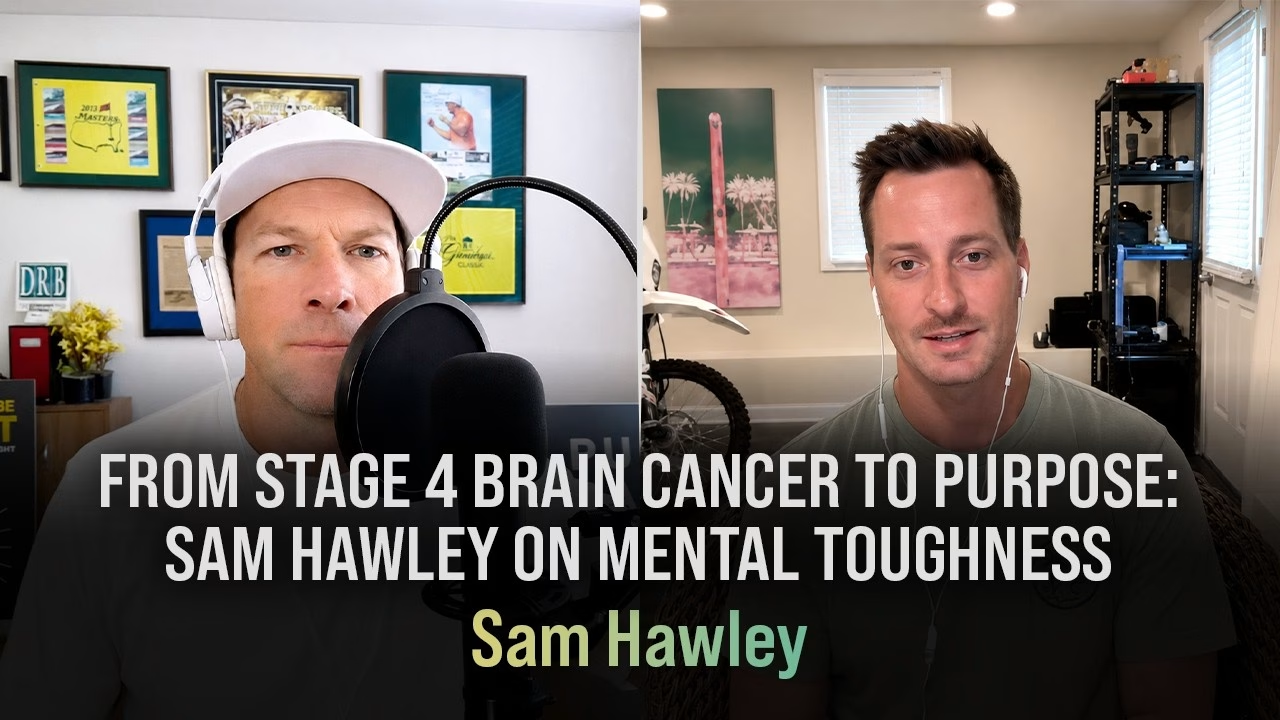
Sam Hawley’s journey from brain cancer to purpose began with a seizure, a frightening diagnosis, and a question that would change everything: What do you do when life becomes harder than anything you could have imagined?
For Sam, the answer was not simply to survive. It was to build faith, commit to daily action, embrace the warrior mindset, and use every hard-earned step to help somebody else find hope. From surgery at Duke University to running during chemotherapy and radiation, Sam’s story is one of resilience that is deeply personal, relentlessly practical, and rooted in God.
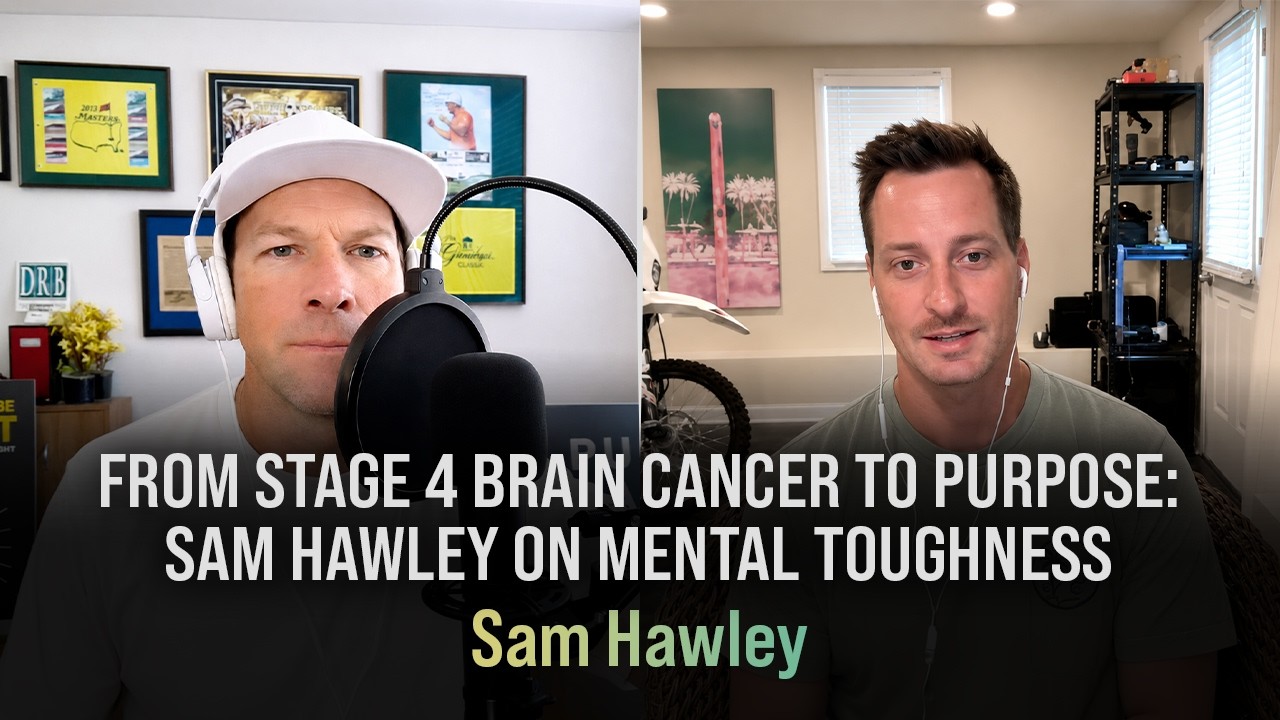
Table of Contents
- ⚡ A Wild Childhood and the Need to Chase Hard Things
- 🧠 The Diagnosis That Changed Everything
- 🙏 Fear, Peace, and Brain Surgery
- 🚶 Walking Before You Feel Ready
- 🏃 Running, Prayer, and the Warrior Mindset
- 🌊 Sobriety and a New Identity
- 🏆 Spartan Racing During Treatment
- 🛡️ Warrior’s Path and Giving Back
- 🌅 Gratitude, Faith, and the Next Step
⚡ A Wild Childhood and the Need to Chase Hard Things
Dr. Rob Bell: Before your diagnosis, who was Sam Hawley?
Sam Hawley: I was definitely a wild man. My friends and I were always chasing something extreme. Surfing, biking, snowboarding, skiing, anything that brought an adrenaline rush, that was what we were into.
When you grow up chasing that feeling, you can become a little bit of a dopamine junkie. You are always looking for the next thing that makes you feel alive. That drive can be powerful, but it can also lead you into places that are not healthy.
Before everything happened, I was partying hard. Drinking had become an everyday thing, and I was smoking weed constantly. I could feel it affecting me mentally and physically, and I wanted to stop, but I had not figured out how to let it go. I did not realize how close I was to the event that would force me to change my whole life.
🧠 The Diagnosis That Changed Everything
Dr. Rob Bell: What happened when the symptoms started?
Sam Hawley: For about two weeks, I had these strange episodes. I would get chills, then heat, then sweating. They would last maybe a minute or two. At the time, I did not know they were small seizures.
One day, I had eaten a healthy meal, salmon and vegetables, and I remember thinking, “I feel good today.” About 20 minutes later, that feeling came back, only much stronger. I called my parents and told them something was wrong. As I was talking, I started fading out. I could not get words out, and then everything went black.
I had a major seizure, fell, and hit my face on a table. When I woke up, I was confused and my chin was bleeding. My parents had called friends who lived close by, and emergency responders soon told me I had experienced a serious seizure.
After hours in the emergency room, an MRI revealed something on my brain. The doctors told my parents and me that it appeared to be a tumor, around the size of a golf ball. That is a hinge moment. There is life before it, and then there is life after it.
For me, the path from brain cancer to purpose started in that hospital room, even though I could not see it yet.
Dr. Rob Bell: How did you get connected with Duke University?
Sam Hawley: My mom made calls. Through a friend, she got connected with Dr. Allan Friedman at Duke. He is a legend. We went to Duke the next day, reviewed everything, and he confirmed that surgery was needed. He scheduled it quickly.
Those 48 hours before surgery were the most intense I have ever experienced. Family and friends rallied around me. More than 300 people gathered at a church in my hometown the night before surgery to pray for me. That meant everything.
For readers seeking general information about brain tumor care and research, Duke Health’s brain tumor program provides useful context about the specialized teams involved in treatment.
🙏 Fear, Peace, and Brain Surgery
Dr. Rob Bell: What do you remember about the day of surgery?
Sam Hawley: I remember the fear getting stronger as I was rolled farther away from my family. I was with two guys taking me down the hallway, and I felt completely terrified.
Then I felt two hands on my shoulders.
Immediately, I went from the greatest fear I had ever felt to the greatest peace I had ever felt.
I still get cold chills talking about it. I know God was there. I cannot fully explain that feeling, but it was special, and it was exactly what I needed.
The surgery itself was intense. I remember more than I was supposed to remember. There were massive screens, medical equipment, and an image of my own brain. During the procedure, the team woke me up so I could identify pictures and confirm I could speak, read, and see normally. I named every picture correctly.
The surgery was expected to take five or six hours. It took about three and a half. Dr. Friedman told my family that the tumor, which appeared golf-ball sized on imaging, was closer to the size of a marble when he operated. It was a blessing that I will never take lightly.
This was not just a story of surviving surgery. It was the beginning of my transformation from brain cancer to purpose.
🚶 Walking Before You Feel Ready
Dr. Rob Bell: You got up and walked almost immediately after brain surgery. What was going through your mind?
Sam Hawley: The morning after surgery, I woke up and said, “I want to get up.” The nurses were shocked. I had just had brain surgery, but I felt like I needed to move.
I stood up, and eventually one of the medical team members said, “If he can get up and wants to walk, let’s walk.” So we walked around the ICU floor. I had a bandage around my head, a catheter, and I had just gone through something massive, but I was walking with a big smile on my face.
That walk mattered. It showed me that movement was part of my healing. Once I was discharged, I stayed near Duke for a few days. Doctors told me not to do much, but I started slowly walking laps around the cul-de-sac outside our place.
I could barely walk at first. But every lap was a statement: I am still here. I am going to fight. I am going to heal.
That was where the spark truly began. I decided nothing was going to stop me from becoming who I was meant to become.
🏃 Running, Prayer, and the Warrior Mindset
Dr. Rob Bell: When did running become more than exercise?
Sam Hawley: A few weeks after surgery, before chemotherapy and radiation began, I started with light jogging. Fifty yards, then walking, then another fifty. The next day I went a little farther.
My family and I took a trip to Boone, North Carolina, and stayed beside the Watauga River. I had been learning about cold exposure and decided to get in the river with my cousin. We stayed in that freezing water for about 15 minutes.
My sister took pictures from the bank. When we looked at them later, there was a bright light appearing directly over me, and another over my cousin. The next day, it happened again. I felt God’s presence so clearly in those moments.
After that experience, I put on my running shoes and ran a mile without stopping. Then I ran another mile later that day. The next day, I ran two.
Those runs became prayer. I cried while I ran. I thanked God. I released fear. I was alone with God, away from the questions, the anxiety, and the constant conversations around cancer.
Running gave me space to process everything.
That is when I committed to running every single day through six weeks of chemotherapy and radiation. I did not want treatment to define what I could do. I wanted my faith, my discipline, and my actions to define me.
Dr. Rob Bell: What happened on the day you felt too sick to run?
Sam Hawley: That was one of the hardest days of chemo and radiation. I felt horrible. My parents pleaded with me to rest. They could see how sick I was, and they were worried.
But I put my shoes on. I told myself, “This is my war zone.” I was not trying to be reckless. I had simply made a commitment that those runs were my time with God, and I felt called to keep going.
The first mile was brutal. I was crying as I ran. Then two eagles flew directly over my shoulder. I almost never saw eagles in Wilmington, and there were two of them, flying through the trees and moving around every obstacle in their path.
I saw life in that moment.
Obstacles are real, but there is always a way through them. I kept running and ended up completing five miles. Mentally, I felt like I had demolished what treatment was trying to make me feel.
I later found strength in Isaiah 40:31, the verse about rising up on wings like eagles, running without growing weary, and walking without fainting. That moment became part of my brain cancer to purpose story, and it is why I have an eagle tattoo.
🌊 Sobriety and a New Identity
Dr. Rob Bell: How did cancer change your relationship with alcohol and substances?
Sam Hawley: I had been trying to let go of those things before the seizure, but addiction had a grip on me. I had stopped drinking and smoking only a couple of days before everything happened.
Since then, I have stayed sober. It has been nearly three years. No amount of money could make me go back. That life is behind me.
God gave me a reason to release what I had struggled to release. Sobriety did not just mean giving something up. It meant becoming the person I was supposed to be. My old life was about chasing a temporary feeling. My new life is about faith, discipline, service, and purpose.
There was another moment on the beach that reinforced that for me. I was walking barefoot with a weighted ruck vest when a fish washed up in front of me. I picked it up and released it back into the ocean. As it swam away, water surged around my legs and splashed over me. It felt like a blessing, like God was washing away what no longer belonged in my life.
|
🏆 Spartan Racing During Treatment
Dr. Rob Bell: You competed in Spartan races while receiving chemo and radiation. Why?
Sam Hawley: I had competed in surfing for years, and I missed competition. I wanted to challenge myself again. When I found Spartan races, I knew they were right up my alley.
I entered a race in Atlanta while I was doing chemotherapy and radiation. Radiation happened Monday through Friday, so I raced on a weekend and brought my chemotherapy with me. I finished second in my division out of more than 100 competitors.
That lit a spark. I knew I was probably the only person there going through treatment, and I realized I might be able to show people what is possible in difficult circumstances.
At my next Spartan race in Charlotte, I won my division. There were around 125 people competing. I remember battling with two larger competitors, then reaching a section where we had to carry a heavy bucket filled with concrete. Something clicked. I threw it onto my shoulder and went after it.
My dad told the announcer I had just won while undergoing chemo and radiation. When it was announced on the podium, the crowd erupted. That moment proved that brain cancer to purpose was not just a personal idea. It could become a message that reached others.
🛡️ Warrior’s Path and Giving Back
Dr. Rob Bell: How did Warrior’s Path begin?
Sam Hawley: I received a call from Duke with unexpected good news. What had initially been described as stage 4 glioblastoma was reclassified as stage 3. I was sitting in a parking lot with my parents when I got that call, and I knew I wanted to do something meaningful for Duke.
I thought about creating a run, a 5K, something that could raise money and bring people together. I wanted to call it Warrior’s Path.
The name came from a powerful letter I received from Cole Fackler, a retired Navy SEAL development group operator. He wrote to me about being a warrior. That message stayed with me, and the warrior mindset had become central to how I approached treatment, recovery, and life.
On my 30th birthday, we held the first Warrior’s Path Run. More than 300 people showed up, and we raised roughly $70,000 for Duke and brain tumor research. It was one of the clearest moments of purpose I have ever experienced.
That is the real power of moving from brain cancer to purpose. Your pain does not have to be the end of the story. It can become a bridge to serve people, fund research, build community, and show someone else that they can keep going.
🌅 Gratitude, Faith, and the Next Step
Dr. Rob Bell: What changed most about your perspective?
Sam Hawley: Every day is a blessing. Every morning, I thank God for the breath of life and for being able to put two feet on the floor.
Before cancer, I did not fully appreciate what it meant to be able to run, surf, paddleboard, compete, or simply feel healthy. Now I do. I carry a cross with me, and I kiss it every morning. My faith is not a small part of my story. It is everything.
I am grateful not only to be alive, but to have a chance to inspire others. People have told me that they found faith because of this journey. That is the purpose. That is what gives every hard day meaning.
Dr. Rob Bell: What would you say to someone facing a tragedy, a diagnosis, or a season without answers?
Sam Hawley: Find your faith. Put God first. Build that relationship with Him.
Hard things happen. Some questions do not have easy answers. But faith changes how you think, how you operate, and how you move through adversity. It helps you find yourself. It helps you find your purpose.
My daily commitment through treatment totaled more than 120 miles of running without missing a day. That commitment taught me something I will carry forever: when you commit to something and put faith beside it, you can do more than you believe you can do.
The road from brain cancer to purpose is not about pretending fear does not exist. It is about taking the next step anyway. Walk the cul-de-sac. Run the first fifty yards. Pray through the pain. Show up when it is hard. Trust that your story can become bigger than the struggle that started it.

Dr. Rob Bell is a Sport Psychology Coach. DRB & associates coach executives and professional athletes. Some clients have included three different winners on the PGA Tour, Indy Eleven, University of Notre Dame, Marriott, and Walgreens.
- Check Out All The Books
- Keynote Speaking On Mental Toughness
- Mental Toughness Podcast as we interview expert athletes and coaches about Mental Strength and their Hinge Moment.
- New Blog Posts are published weekly.
- Follow on Twitter @drrobbell
- Follow on Instagram @drrobbell